
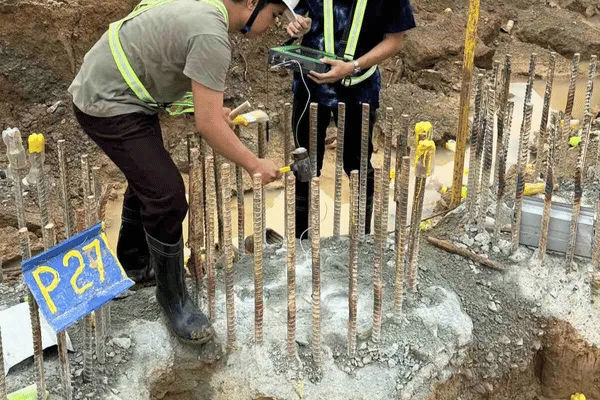
Strong construction depends on materials that perform according to their intended specifications. Grout plays an important role across many construction applications, from masonry work and structural connections to foundation-related systems and equipment support. When grout quality is uncertain, questions may arise about strength, continuity, placement, and long-term performance.
Grout integrity testing Philippines provides a structured approach for evaluating grout quality through appropriate field sampling, laboratory examination, and project-specific testing procedures. Proper testing gives engineers, contractors, developers, and project managers technical information that can support construction quality control.
Grout testing should always reflect the type of grout, its intended application, project specifications, applicable standards, and the engineering purpose behind the evaluation. ASTM C1019-26, for example, covers field and laboratory sampling and compression testing of grout used for masonry construction.
For Philippine construction projects, working with a qualified materials testing laboratory can help project teams obtain documented test results while maintaining a clear quality-control process.
What Is Grout Integrity Testing?
Grout integrity testing Philippines refers to testing and evaluation procedures used to assess specified properties and quality characteristics of grout. The exact testing program depends on the grout type, construction application, project specifications, and applicable testing standards.
Grout used for masonry construction may contain cementitious materials and aggregate with relatively high water content to support placement. ASTM C1019-26 provides procedures for field and laboratory sampling and compression testing of masonry grout. The standard also explains that the method can support grout proportion selection and quality control for uniformity of grout preparation during construction.
Grout may also be supplied as a packaged dry hydraulic-cement product. ASTM C1107/C1107M-26 covers packaged dry, hydraulic-cement grout intended for applications where changes below the initial placement height must be avoided, such as support beneath structures or machinery. The specification includes performance requirements and consistency-related procedures.
Because grout applications vary, there is no single test that should automatically be applied to every project. A suitable Grout integrity testing Philippines program starts with understanding the construction application and identifying the properties that need verification.
Why Grout Integrity Matters for Philippine Construction Projects
Grout can perform several functions within a construction system. Depending on the design, it may fill spaces, provide support, transfer loads, connect components, surround embedded elements, or form part of masonry construction.
Poor grout quality may create concerns such as incomplete filling, weak areas, inconsistent material properties, cracking, segregation, inadequate bonding, or other construction defects. These conditions can affect the expected performance of the completed work.
A properly planned Grout integrity testing Philippines program helps project teams obtain objective technical information rather than relying solely on visual inspection.
Supporting Construction Quality
Testing provides measurable results that can be compared with project requirements. Engineers and quality-control teams can use these results as part of their broader construction documentation.
Identifying Potential Quality Issues
Testing can help identify material or preparation concerns before construction progresses too far. Early identification can allow technical teams to investigate the cause and determine appropriate corrective action.
Supporting Technical Documentation
Laboratory reports and field records can become part of project quality documentation. Clear records can help engineers, contractors, inspectors, and project owners track material performance and testing activities.
Common Applications Where Grout Integrity Can Matter
The need for Grout integrity testing Philippines depends on the construction application and project requirements. Several applications may require careful grout quality control.
Foundation and Pile-Related Work
Foundation systems require careful attention to material quality and construction conditions. Grout may form part of certain foundation-related applications, depending on the engineering design.
Inch-On Materials Testing Laboratory provides field testing services covering soil, concrete, and foundation piles. This capability allows project teams to coordinate material and foundation-related testing through a laboratory experienced with construction quality evaluation.
Structural Connections
Some structural systems use grout around components or connections where proper filling and material performance are important. Testing requirements should follow the approved structural design, project specifications, and applicable standards.
Repair and Rehabilitation Projects
Grout may also be used for repair, filling, strengthening, or rehabilitation work. Existing structures can present different site conditions compared with new construction, making appropriate inspection and testing particularly useful.
Infrastructure and Industrial Projects
Large infrastructure and industrial projects often require detailed quality records for construction materials. A structured Grout integrity testing Philippines program can form part of a wider materials testing and quality assurance plan.
How Grout Integrity Testing Is Planned
A successful testing program starts before specimens reach the laboratory. Project teams should identify the purpose of testing and determine what information is required.
Review Project Specifications
Testing personnel should review relevant drawings, specifications, mix information, required strength, acceptance criteria, sampling frequency, curing requirements, and reporting requirements.
Identify the Grout Application
The laboratory should understand where and how the grout will be used. Masonry grout, nonshrink grout, foundation-related grout, repair grout, and other products may have different testing requirements.
Select the Appropriate Testing Approach
Test selection should reflect the material and engineering purpose. ASTM C1019-26, for example, specifically addresses sampling and compression testing of grout used for masonry construction.
For packaged nonshrink hydraulic-cement grout, ASTM C1107/C1107M-26 provides a separate specification covering applicable performance requirements.
Establish Sampling Requirements
Representative sampling is an important part of quality testing. Samples should be properly identified and handled according to the applicable test procedure and project requirements.
Grout Integrity Testing Methods and Related Quality Checks
A Grout integrity testing Philippines program may involve different laboratory or field activities depending on the project.
Laboratory-Based Material Testing
Laboratory testing may evaluate properties such as compressive strength or other characteristics specified by the project.
For masonry grout, ASTM C1019-26 covers field and laboratory sampling followed by compression testing. The standard also notes that specimens are prepared using molds made from masonry units with absorption and moisture characteristics similar to those used for construction.
This approach is intended to provide test conditions that account for moisture absorption associated with masonry construction.
Consistency and Fresh Grout Evaluation
Certain grout specifications may require evaluation of fresh material properties. ASTM C1107/C1107M-26 includes consistency testing and yield determination for packaged dry hydraulic-cement grout.
The appropriate evaluation should depend on the product specification and intended use rather than applying one procedure to every grout product.
Field Sampling and Inspection
Field work can include sample collection, construction observations, and other project-specific activities. Proper coordination between site personnel and the laboratory helps maintain sample identification and testing records.
Foundation-Related Integrity Assessment
When grout forms part of a foundation system, additional foundation testing may be required based on the design. Inch-On’s documented field-testing capabilities include soil, concrete, and foundation pile testing, supporting a broader approach to construction and foundation quality assessment.
ASTM and AASHTO Standards for Construction Material Testing
Testing standards provide established procedures for evaluating construction materials.
ASTM C1019-26 is specifically identified as the current ASTM standard for sampling and testing grout for masonry. It covers field and laboratory sampling and compression testing of masonry grout.
ASTM C1107/C1107M-26 covers packaged dry hydraulic-cement nonshrink grout and establishes requirements related to its intended applications and performance.
A project may also specify AASHTO procedures where applicable. Inch-On Materials Testing Laboratory states that its laboratory follows ASTM and AASHTO testing standards.
Standards should not be selected simply because they mention grout. The material type, construction application, engineering specification, and required property should guide test selection.
How Inch-On Materials Testing Laboratory Supports Construction Quality
Inch-On Materials Testing Laboratory is a DPWH-BRS accredited Engineering and Construction Laboratory established in November 2018. The laboratory provides independent testing for soil and construction materials and conducts field testing of soil, concrete, and foundation piles.
Its documented services include both field testing and laboratory testing.
DPWH-BRS Accreditation
Inch-On Materials Testing Laboratory is accredited by the Department of Public Works and Highways – Bureau of Research and Standards (DPWH-BRS). This accreditation forms part of the laboratory’s technical credentials for construction-related testing.
For companies searching for Grout integrity testing Philippines, checking laboratory accreditation and testing capability can be an important part of selecting a testing provider.
Laboratory Testing
Laboratory testing allows construction materials to undergo controlled evaluation using established procedures. Inch-On provides laboratory testing services for soil and construction materials.
Field Testing
Field testing provides project-site evaluation of selected construction materials and foundation systems. Inch-On’s documented field services include soil, concrete, and foundation pile testing.
ASTM and AASHTO-Based Procedures
The supplied company information states that Inch-On follows ASTM and AASHTO testing standards. These standards provide established procedures for many construction material testing applications.
Benefits of Working With a Professional Testing Laboratory
Choosing an appropriate testing laboratory can help project teams establish a more organized quality-control process.
Reliable Technical Data
Laboratory testing provides measurable results that can be reviewed against project requirements and applicable specifications.
Better Construction Quality Control
Regular sampling and testing can help identify material variations and quality concerns during construction.
Clear Technical Reports
Detailed reports provide documented test results that engineers and project managers can review as part of project records.
Support for Construction Decisions
Testing does not replace engineering judgment. Rather, test results provide technical information that engineers and authorized project personnel can consider when making construction decisions.
Grout Integrity Testing vs. Routine Grout Inspection
Routine inspection and Grout integrity testing Philippines serve different but complementary purposes.
Routine inspection generally focuses on observable conditions, construction practices, workmanship, placement, and compliance with site procedures. Testing provides measured information about specified material properties.
A project may use both approaches:
- Routine inspection: Observes placement, workmanship, site conditions, and construction procedures.
- Material testing: Evaluates selected properties through laboratory or field procedures.
- Documentation: Records samples, locations, dates, procedures, and results.
- Engineering review: Allows qualified personnel to interpret results alongside project requirements.
Using inspection and testing together can create a more complete quality-control record.
When Should You Consider Grout Integrity Testing?
The appropriate timing for Grout integrity testing Philippines depends on the project specifications and engineering requirements.
Testing may be considered during:
- Material qualification
- Trial mixes
- Construction preparation
- Grout placement
- Quality-control sampling
- Post-placement evaluation
- Foundation-related construction
- Repair or rehabilitation work
- Investigation of suspected defects
- Project acceptance activities
Testing requirements should be established before construction starts whenever possible. Early coordination helps laboratories prepare appropriate sampling procedures, equipment, personnel, and reporting requirements.
Factors That Can Affect Grout Quality
Several factors can influence grout performance.
Mixing Procedures
Incorrect proportions, inadequate mixing, or inconsistent batching can affect the properties of fresh and hardened grout.
Water Content
Water quantity can influence workability, consistency, strength development, and other material characteristics. Project requirements should determine the appropriate water-to-material relationship.
Placement
Poor placement practices can contribute to incomplete filling, voids, segregation, or other defects.
Curing
Curing conditions can affect strength development. Test specimens should be handled and cured according to the applicable testing procedure.
Material Storage
Cementitious materials and packaged grout products should be stored according to manufacturer and project requirements. Moisture exposure and contamination can affect material condition.
Site Conditions
Temperature, substrate conditions, access, construction sequence, and environmental exposure can affect grout placement and performance.
What Information Should You Provide a Testing Laboratory?
When requesting Grout integrity testing Philippines, providing complete project information can help the laboratory determine the appropriate testing requirements.
Useful information may include:
- Project name
- Project location
- Type of grout
- Product name or manufacturer
- Intended grout application
- Mix design
- Required compressive strength
- Project specifications
- Applicable standards
- Required sampling frequency
- Expected construction schedule
- Sampling location
- Drawings or technical documents
- Required reporting format
- Contact details of the project engineer or quality-control representative
Clear information allows the testing laboratory to understand the testing objective before field or laboratory work begins.
Choosing a Grout Integrity Testing Laboratory in the Philippines
Project owners and contractors searching for Grout integrity testing Philippines should review several factors before selecting a laboratory.
Check Accreditation
Confirm whether the laboratory has relevant accreditation for the services required by the project.
Review Testing Capabilities
Ask whether the laboratory can perform the required field and laboratory procedures.
Ask About Testing Standards
Confirm which ASTM, AASHTO, project-specific, or other applicable procedures will be followed.
Review Equipment and Technical Procedures
Testing equipment should be suitable for the required examination, with appropriate maintenance and calibration practices.
Request Clear Reports
Technical reports should present the required test information clearly, including sample identification, testing date, applicable method, measurements, and results.
Consider Field Service Capability
Field testing capability can be useful when samples or observations must be collected directly at a construction site.
Why Choose Inch-On Materials Testing Laboratory for Construction Testing?
Inch-On Materials Testing Laboratory provides independent engineering and construction testing services for project teams that require technical evaluation of soil and construction materials.
Established in November 2018, the laboratory is DPWH-BRS accredited and provides laboratory and field testing services. Its documented capabilities include soil, concrete, and foundation pile testing.
The laboratory also states that its testing follows ASTM and AASHTO standards.
For projects requiring Grout integrity testing Philippines, the testing program should be discussed with the laboratory based on the grout type, intended application, project specifications, and required test properties. This approach helps avoid applying an unsuitable test procedure to a material or application.
Whether a project involves masonry, concrete, foundation work, structural construction, or infrastructure, proper material testing can provide useful technical information for quality-control documentation.
Frequently Asked Questions About Grout Integrity Testing Philippines
What is grout integrity testing?
Grout integrity testing is a group of project-specific testing and evaluation activities used to assess specified grout properties and construction quality. The exact procedure depends on the grout type, application, project specifications, and applicable standards.
Why is grout integrity testing important?
Grout integrity testing Philippines can provide measurable technical information that supports construction quality control. Testing can help project teams evaluate specified properties and maintain documented quality records.
What types of grout can be tested?
Different grout products require different evaluation procedures. Masonry grout, packaged nonshrink grout, repair grout, and other products may have different specifications. The testing method should be selected based on the material and intended application.
Is grout integrity testing required for every construction project?
Testing requirements vary. Project specifications, engineering design, applicable standards, contract requirements, and regulatory requirements should determine whether testing is required and which procedures should be used.
Can grout testing be performed at a construction site?
Yes, certain grout sampling and testing activities can involve field work. ASTM C1019-26, for example, covers both field and laboratory sampling and compression testing of masonry grout.
Does Inch-On provide field testing?
Yes. The supplied company information identifies Inch-On Materials Testing Laboratory as a provider of field testing for soil, concrete, and foundation piles.
Does Inch-On follow ASTM standards?
Yes. Inch-On’s supplied company information states that the laboratory follows ASTM and AASHTO testing standards.
Is Inch-On accredited by DPWH-BRS?
Yes. Inch-On Materials Testing Laboratory is identified within the supplied company information as accredited by the Department of Public Works and Highways – Bureau of Research and Standards.
What ASTM standard covers masonry grout testing?
ASTM C1019-26 is the current ASTM standard titled Standard Test Method for Sampling and Testing Grout for Masonry. It covers field and laboratory sampling and compression testing of grout used for masonry construction.
What standard covers packaged nonshrink grout?
ASTM C1107/C1107M-26 covers packaged dry hydraulic-cement nonshrink grout. The specification addresses grout intended for applications where a change below the initial placement height should be avoided.
Takeaway
Grout integrity testing Philippines can form an important part of construction quality control when grout contributes to masonry, structural, foundation, repair, or infrastructure work. Proper evaluation provides technical information that can complement site inspection and engineering review.
The correct testing method depends on the grout product, construction application, project specifications, and applicable standards. ASTM C1019-26 provides procedures for sampling and compression testing of masonry grout, while ASTM C1107/C1107M-26 addresses packaged dry hydraulic-cement nonshrink grout.
Inch-On Materials Testing Laboratory provides independent laboratory and field testing services for construction projects. Its documented capabilities cover soil, concrete, and foundation pile testing, with testing procedures based on ASTM and AASHTO standards. The laboratory is also accredited by DPWH-BRS.
For a Grout integrity testing Philippines requirement, project teams should provide the laboratory with relevant specifications, grout information, intended application, required properties, sampling requirements, and applicable standards. Proper coordination at the planning stage can help establish a testing program suited to the project’s technical needs.
Need construction material or foundation testing support? Contact Inch-On Materials Testing Laboratory to discuss your project’s testing requirements and determine the appropriate testing approach.