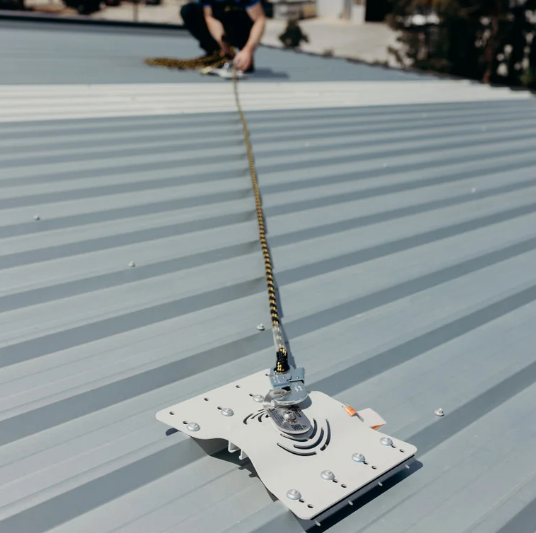
anchor point equipment in Cambodia supports safe work at elevation across construction, maintenance, and industrial operations. Rapid urban development and rising vertical structures across Cambodian cities have increased demand for reliable fall protection systems. Workers face tasks on rooftops, towers, bridges, and complex facades where controlled access and secure tie-off solutions are required.
Groxx Gears provides engineered safety systems and industrial hardware designed for demanding environments. These systems include anchor solutions, lifeline systems, and access equipment that support safer work at height across multiple regions, including projects where anchor point equipment in Cambodia is essential for operational safety.
Anchor systems form a critical connection between a worker and a stable structure. They are designed to absorb force during a fall event and reduce impact on the human body. Without properly engineered anchor systems, elevated work becomes significantly more hazardous.
Rising Demand for Anchor Point Equipment in Cambodia Construction Sector
anchor point equipment in Cambodia continues to see higher demand due to expanding infrastructure projects. Urban centers are experiencing increased construction of commercial buildings, residential towers, and industrial facilities. Each of these projects requires structured safety systems for workers operating above ground level.
Construction teams depend on anchor systems for tasks such as steel installation, roofing, facade work, and structural inspection. Maintenance teams also rely on secure attachment systems when servicing tall buildings or industrial equipment.
Growth across the construction sector has created a stronger focus on workplace safety planning. Contractors and project managers are prioritizing fall protection systems early during project design phases to reduce risk exposure later during execution.
anchor point equipment in Cambodia plays a central role across these developments, supporting safer work practices and helping teams maintain operational control during elevated tasks.
Core Types of Anchor Point Equipment in Cambodia Projects
anchor point equipment in Cambodia includes several system types designed for different structural and operational needs.
Fixed anchor points are permanently installed on rooftops or structural steel frameworks. These provide consistent tie-off locations for workers performing regular maintenance or inspection tasks.
Temporary anchor systems are used during short-term construction or repair work. These systems can be repositioned based on job requirements and removed once the task is complete.
Mobile anchor devices offer flexibility for changing work environments. These are commonly used when structural attachment points are limited or when work zones shift frequently.
Horizontal lifeline systems allow safe movement across rooftops or elevated platforms. Workers can travel along a secured line while remaining continuously attached.
Vertical lifeline systems support ladder climbing or tower access. These systems ensure continuous protection while workers move upward or downward along structures.
anchor point equipment in Cambodia often combines multiple system types to match project complexity and structure design.
Engineering Quality Behind Anchor Point Equipment in Cambodia
anchor point equipment in Cambodia requires precise engineering to handle dynamic load conditions during fall events. Structural strength, material selection, and manufacturing accuracy all contribute to system reliability.
High-strength alloys are commonly used to ensure durability under stress. Heat treatment processes improve hardness and resistance to deformation, extending service life across demanding environments.
Precision manufacturing using CNC grinding and hobbing processes helps achieve consistent tolerances. This level of accuracy supports stable load distribution and smooth integration with lifeline systems and connectors.
Quality control processes often follow recognized grading systems used within industrial equipment manufacturing. Each component undergoes load testing and inspection to confirm performance under simulated fall conditions.
anchor point equipment in Cambodia must maintain stability under sudden force changes, which makes engineering consistency a critical requirement for all components.
Safety Benefits of Anchor Point Equipment in Cambodia Worksites
anchor point equipment in Cambodia provides essential protection for workers operating at elevation. The primary benefit is reduction of fall-related injury risk through controlled attachment systems.
Secure anchor systems help distribute force during sudden load events, reducing impact on both the worker and structural connection point. This protection is essential for roofing, steel assembly, facade cleaning, and maintenance operations.
Another benefit is improved worker confidence. When crews trust their safety systems, they perform tasks more efficiently and with better focus on technical execution.
anchor point equipment in Cambodia also supports regulatory compliance across construction projects. Many worksites require documented fall protection systems as part of safety audits and project approvals.
Long service life of properly engineered anchor systems reduces replacement frequency and supports consistent safety performance across project timelines.
Applications of Anchor Point Equipment in Cambodia Across Industries
anchor point equipment in Cambodia is used across multiple sectors beyond construction alone.
High-rise building construction relies on anchor systems for steel erection, concrete installation, and external finishing work. Workers depend on secure tie-off points while operating at elevation.
Facade maintenance teams use anchor systems for cleaning glass surfaces, repairing exterior panels, and performing structural inspections.
Industrial facilities use anchor point equipment in Cambodia for maintenance of tall machinery, storage systems, and elevated platforms.
Infrastructure projects such as bridges and transport structures require secure fall protection systems for inspection and repair operations.
anchor point equipment in Cambodia supports safe access across all these environments, helping teams complete tasks that would otherwise carry significant risk.
Role of Groxx Gears in Anchor Point Equipment in Cambodia Solutions
Groxx Gears provides engineered safety systems that support elevated work requirements across multiple regions, including projects requiring anchor point equipment in Cambodia.
The company focuses on high-performance fall protection systems, including lifeline solutions and structural safety equipment. These systems are designed for integration across construction sites, industrial facilities, and maintenance environments.
Horizontal and vertical lifeline systems support continuous worker protection during movement across elevated areas. Anchor systems form the foundation of these safety setups by providing stable connection points.
Groxx Gears also develops access systems used for building maintenance tasks, including suspended platforms and facade access solutions. These systems often depend on anchor point equipment in Cambodia for secure installation and operation.
Engineering focus includes material strength, manufacturing precision, and load performance testing. These factors support reliability across demanding job sites where safety performance cannot be compromised.
Selection Factors for Anchor Point Equipment in Cambodia Projects
anchor point equipment in Cambodia selection depends on several site and project conditions.
Structural compatibility is a primary factor. Anchor systems must connect securely to building materials such as steel, concrete, or reinforced roofing structures.
Load capacity requirements vary based on number of workers and type of work performed. Systems must support expected force levels during both normal use and fall events.
Environmental exposure also influences material selection. Outdoor installations require resistance to corrosion, moisture, and temperature variation.
Project duration determines whether fixed or temporary systems are more appropriate. Long-term installations often use permanent anchor points, while short projects may rely on temporary systems.
Maintenance planning is another consideration. Regular inspection schedules help ensure ongoing safety performance across the lifespan of anchor point equipment in Cambodia installations.
Installation and Maintenance Practices for Anchor Point Equipment in Cambodia
Proper installation of anchor point equipment in Cambodia requires accurate positioning and secure structural attachment. Anchor points must be installed on load-bearing elements capable of supporting fall arrest forces.
Installation teams typically follow engineered layout plans that define spacing, load direction, and connection methods. This ensures consistent safety coverage across work zones.
Regular inspection cycles help identify wear, corrosion, or mechanical damage. Early detection of issues helps maintain system reliability and prevents unexpected failures.
Maintenance records support compliance requirements and provide documentation for safety audits. Each inspection should include verification of structural integrity and connector condition.
Training programs for workers also play a role. Proper use of anchor systems ensures that equipment functions as designed during real work conditions.
Future Outlook for Anchor Point Equipment in Cambodia
anchor point equipment in Cambodia will continue gaining importance as construction activity expands and building designs become more complex. Taller structures and advanced architectural designs require more sophisticated fall protection systems.
Increased awareness of workplace safety is also driving adoption of engineered anchor systems across smaller contractors and maintenance teams.
Technological improvements in materials and manufacturing processes are expected to improve system durability and performance. This includes stronger alloys, improved corrosion resistance, and more precise load distribution designs.
anchor point equipment in Cambodia will remain a central part of safe work practices across industries where elevation work is required.
FAQ – Anchor Point Equipment in Cambodia
What is anchor point equipment in Cambodia used for?
anchor point equipment in Cambodia is used to secure workers operating at height, helping reduce risk of falls during construction, maintenance, and inspection tasks.
Which industries rely on anchor point equipment in Cambodia?
Construction, industrial maintenance, facade cleaning, infrastructure inspection, and high-rise building services commonly depend on anchor systems.
What types of anchor systems are available in Cambodia?
Common systems include fixed anchor points, temporary anchors, mobile devices, horizontal lifelines, and vertical lifeline systems.
How often should anchor point equipment in Cambodia be inspected?
Inspection frequency depends on usage conditions, though regular checks before and after projects are standard practice to maintain safety performance.
Why is engineering quality important for anchor systems?
Strong materials, precise manufacturing, and tested load capacity help ensure anchor systems perform correctly during fall events.
Can anchor point systems be customized for different buildings?
Yes, anchor systems can be designed to match structural layouts, load needs, and specific site conditions.