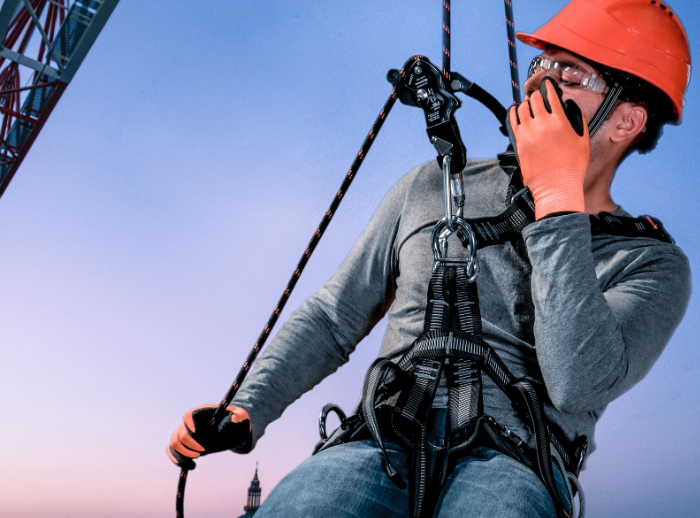
Work at height requires dependable equipment, careful planning, and clear safety procedures. Construction crews, maintenance teams, warehouse staff, factory technicians, and transport workers often perform tasks above machinery, vehicles, production areas, or structural surfaces. A properly planned Overhead Lifeline in France can provide continuous fall protection while allowing workers to move across a defined work zone.
GROXX GEARS supplies heavy-duty industrial solutions created for demanding construction and maintenance conditions. Its product scope covers industrial fasteners, rigging gear, fall protection equipment, lifeline systems, anchor equipment, and building maintenance systems. This broad technical focus supports project teams seeking dependable hardware for high-risk operations.
An Overhead Lifeline in France should match the structure, work path, user count, clearance level, and expected frequency of work. Proper selection can support safer movement, reduce repeated connection changes, and help workers stay attached throughout a task. Every project should receive a professional site assessment before equipment selection or setup.
What Is an Overhead Lifeline System?
An overhead lifeline is a fall protection system placed above the worker’s normal operating area. The system may feature a flexible cable or rigid rail connected to approved structural supports. A mobile attachment device moves along the cable or rail while the worker completes assigned tasks below.
The worker connects to the system through suitable body-worn fall arrest equipment and an approved connecting device. A self-retracting lifeline may also form part of the setup, depending on clearance, movement requirements, and project design.
An Overhead Lifeline in France may serve one worker or several workers when the system has been specifically designed for that user capacity. The structure, anchors, cable, rail, mobile components, connectors, and energy-management parts must work together as one complete system.
Overhead placement can help limit free-fall distance because the connection point remains above the worker. Such placement may also lower swing-fall exposure when the connection stays close to the worker’s travel path. Final performance depends on system geometry, component specifications, worker location, and structural strength.
Why Choose an Overhead Lifeline in France?
Many work areas provide no practical ground-level protection against falls. Guardrails may not suit every production bay, vehicle servicing area, warehouse aisle, roof section, or construction zone. An Overhead Lifeline in France may offer a practical option where workers need mobility below an elevated support structure.
Continuous attachment remains one of the main advantages. Workers can move across a designated zone without connecting and disconnecting at every new position. Reduced connection changes may support better work flow and lower the chance of an accidental unprotected moment.
Overhead systems can also support repeated maintenance tasks. Factories, transport depots, warehouses, and energy facilities may require regular access above equipment or vehicles. A permanent system gives trained personnel a defined method for completing those tasks.
Each worksite has different requirements. Beam positions, roof supports, machinery layouts, worker routes, and clearance levels can vary greatly. A site-specific Overhead Lifeline in France should reflect those differences rather than relying on a standard setup that may not suit actual conditions.
Common Applications for an Overhead Lifeline in France
Warehouses and distribution centres often require work above loading bays, storage racks, conveyor lines, service areas, or vehicle zones. An overhead system may protect workers during maintenance, stock handling, inspection, or repair tasks.
Manufacturing facilities may require access above production lines, machinery, cranes, elevated platforms, or assembly areas. A properly positioned Overhead Lifeline in France can support technicians who need secure movement while keeping the work area below as clear as possible.
Construction sites may use overhead lifelines during structural steel work, roofing, bridge projects, formwork tasks, and large commercial developments. Temporary or permanent arrangements may be considered according to project duration and structural conditions.
Transport facilities also present many work-at-height risks. Bus depots, truck workshops, railway service centres, and aircraft maintenance areas may require workers to access vehicle roofs or upper components. Overhead connection systems can provide protection without placing unnecessary barriers around the work zone.
Energy facilities, utility sites, processing plants, and other heavy-duty locations may also benefit from an Overhead Lifeline in France. Such projects require equipment suited to repeated use, challenging environments, and carefully controlled safety procedures.
Core Components of an Overhead Lifeline System
Every overhead lifeline depends on several connected components. Structural anchors transfer system forces to the supporting structure. These anchors must suit the base material, expected loads, system layout, and approved design.
A horizontal cable or rigid rail creates the worker’s travel path. Cable systems may provide long-distance coverage and flexible routing. Rigid rails may offer controlled trolley movement and lower deflection across certain work zones.
A mobile trolley, shuttle, or traveller moves along the overhead line. This component allows the worker to change position without repeatedly removing the connection. Smooth movement helps reduce snagging and supports practical daily operation.
Energy-management components may help control forces during a fall. End stops, intermediate supports, tensioning devices, connectors, and attachment hardware also contribute to system performance.
Body-worn fall arrest equipment and a suitable lanyard or self-retracting device complete the worker connection. All parts must be compatible. Mixing components without technical review may affect system behaviour and worker safety.
Identification labels and inspection records also matter. Each Overhead Lifeline in France should carry clear information about user limits, system type, inspection status, and operating restrictions.
Cable-Based and Rigid-Rail Overhead Lifelines
Cable-based systems use a tensioned wire cable secured between structural anchor points. Intermediate supports may be added across longer distances. These systems can cover broad work areas and may suit buildings with long, open routes.
Cable deflection requires careful assessment. During a fall, cable movement can increase the total distance travelled by the worker. Fall clearance calculations should account for this movement, along with connector length, energy absorber deployment, worker height, and safety margin.
Rigid-rail systems use a fixed metal track with a moving trolley. Such systems may show less deflection than many cable arrangements. This feature can make rigid rails suitable where clearance below the worker remains limited.
A rigid rail may also suit repetitive tasks across production facilities, transport workshops, loading zones, and maintenance bays. The trolley can follow the worker along a fixed path while supporting continuous attachment.
Neither option suits every project. The correct Overhead Lifeline in France depends on travel distance, structure type, user count, available clearance, task frequency, exposure conditions, setup requirements, and project budget.
Key Benefits of an Overhead Lifeline in France
Continuous worker attachment remains a major benefit. Workers can travel across approved work areas while staying connected to the same system. This arrangement reduces the need to locate separate anchor points throughout each task.
Greater mobility can also support productivity. Technicians may move between service points without stopping for repeated connection changes. Such movement can be valuable across vehicle bays, production areas, warehouse aisles, and building maintenance zones.
An Overhead Lifeline in France may also reduce swing-fall exposure when the connection point remains close to the worker’s vertical position. A poorly placed anchor can cause sideways movement during a fall. Correct overhead alignment can help control that risk.
Permanent systems support repeated work. Rather than creating a temporary solution for every maintenance visit, facility owners can establish a defined access route for trained workers. This approach can support consistent procedures and clearer safety management.
Overhead systems may also keep connection equipment away from floors, machinery, and work surfaces. Reduced contact with sharp edges or moving equipment may help protect components from avoidable damage.
Why Anchor Position Matters
Anchor position affects fall distance, swing movement, connector performance, and clearance needs. A connection placed below shoulder level may allow a longer fall before the system begins controlling movement. A well-positioned overhead connection may reduce this distance.
The worker should remain close to the approved travel path. Moving too far sideways from the overhead line may create a swing-fall condition. Such movement could carry the worker toward machinery, structural members, walls, or other hazards.
Clearance below the work area must receive careful review. Available space should account for system deflection, connector extension, energy absorber deployment, body position, and an added safety margin.
An Overhead Lifeline in France should never be selected through product price alone. Anchor location, structural capacity, work method, rescue access, and equipment compatibility all affect safe performance.
Qualified professionals should review these factors before system approval. Project teams should also verify all applicable French and European safety requirements connected with work at height and fall protection.
Site Factors That Affect System Design
Structural conditions form the basis of every overhead system. Roof beams, concrete supports, steel members, gantries, ceilings, and service structures may offer possible attachment locations. Each location requires assessment before approval.
Worker movement also affects the system layout. A straight work path may suit a simple cable or rail. Curves, corners, changing heights, and obstructions may require a more complex arrangement.
User count must be confirmed during planning. A system designed for one worker may not support several workers at the same time. Each added user can affect system forces, spacing, movement, and rescue planning.
Environmental exposure also matters. Outdoor projects may face rain, wind, dust, temperature changes, and corrosion. Manufacturing sites may expose components to chemicals, heat, moisture, or airborne particles.
Machinery and vehicle movement below the system require close attention. An Overhead Lifeline in France should protect workers without creating new contact hazards, blocked routes, or equipment conflicts.
Future facility changes should also be considered. New production equipment, building modifications, or revised work methods may affect system access and performance.
Planning an Overhead Lifeline in France
Planning should begin with a full review of the work area. The assessment should identify fall edges, worker routes, machinery, structural supports, lower-level hazards, and access points.
The project team should define each task covered by the system. Maintenance, inspection, cleaning, repair, loading, and construction work may require different movement ranges and connection methods.
Structural suitability must be confirmed before anchor placement. Supporting members should be checked against expected forces and system requirements. Attachment points should never be selected through visual judgment alone.
Fall-clearance calculations should reflect actual site dimensions. Measurements must consider the worker’s position, system height, connector type, cable movement, rail movement, and objects below.
Rescue procedures should form part of the original plan. A worker left suspended after a fall may require rapid assistance. Rescue access, equipment, team roles, communication methods, and emergency response steps should be clear before work begins.
A well-planned Overhead Lifeline in France connects equipment selection with actual site conditions rather than treating fall protection as a separate purchase.
Setup and Commissioning Requirements
System setup should follow approved technical documents and manufacturer requirements. Trained personnel should complete all structural attachments, cable tensioning, rail alignment, end connections, and component assembly.
The system should allow smooth trolley or shuttle movement across the intended work path. Obstructions, sharp edges, misaligned parts, and restricted travel points should be corrected before approval.
All system labels should remain visible. User capacity, system limits, inspection dates, and operating instructions should be easy to identify.
Testing and final checks should be completed before worker access. Relevant records may include system drawings, component details, anchor information, user limits, inspection requirements, and commissioning results.
An Overhead Lifeline in France should remain out of service until all required reviews have been completed. Workers should not rely on a newly fitted system without formal approval and clear operating instructions.
Inspection and Maintenance
Workers should complete a visual check before every use. The review may cover cables, rails, trolleys, connectors, labels, visible anchors, body-worn equipment, and self-retracting devices.
Signs of damage can include corrosion, deformation, cuts, broken wires, loose hardware, unusual movement, damaged labels, or deployed energy absorbers. Any questionable component should be removed from service or reported for professional assessment.
Formal inspections should follow the manufacturer’s instructions, applicable requirements, site policy, and exposure conditions. Heavy use or harsh environments may require more frequent checks.
Maintenance records should document inspection dates, findings, repairs, replacement parts, and approval status. Clear records support accountability and help facility managers track system condition.
After any fall event, the affected Overhead Lifeline in France should be taken out of service. A qualified person should assess the full system, supporting structure, connectors, energy-management parts, and body-worn equipment before further use.
Worker Training and Rescue Preparation
Equipment alone cannot provide complete protection. Workers need training covering correct connection methods, approved travel routes, user limits, pre-use checks, restricted areas, and emergency actions.
Training should explain how to connect and disconnect safely. Workers should understand where attachment may occur, how the trolley moves, and which parts must never be altered.
User capacity must also be clear. Staff should know whether the system supports one person or several people. They should also understand spacing rules and movement restrictions.
Rescue preparation deserves equal attention. A fall arrest system may stop a worker from reaching the ground, yet rescue may still be required. Teams should know how to report an incident, secure the area, reach the worker, and complete a controlled recovery.
Regular practice can help workers recall their roles during an emergency. An Overhead Lifeline in France should always operate alongside a clear rescue plan suited to the worksite.
GROXX GEARS and Heavy-Duty Fall Protection
GROXX GEARS focuses on equipment built for demanding construction, maintenance, and industrial tasks. The company supplies safety hardware, rigging equipment, fasteners, anchor solutions, lifelines, and building maintenance systems.
Durability remains central to its product approach. High-strength alloys, controlled manufacturing methods, and careful production processes support equipment intended for challenging work environments.
GROXX GEARS also recognises that structures differ. Roof layouts, work routes, access needs, and maintenance tasks can change from one project to another. Fall protection equipment should reflect those project conditions.
An Overhead Lifeline in France from GROXX GEARS can form part of a wider work-at-height safety plan. Related equipment may include horizontal lifelines, vertical lifelines, anchor points, self-retracting devices, suspended access solutions, and building maintenance equipment.
Project teams should share accurate drawings, structural details, user numbers, work methods, and required coverage areas when requesting a system proposal.
Choosing a Supplier for an Overhead Lifeline in France
Supplier selection should focus on technical knowledge, product durability, clear specifications, and practical project support. A dependable provider should understand worker movement, structural limits, fall clearance, equipment compatibility, and inspection needs.
Clear documentation also matters. Product details, user limits, system layouts, maintenance requirements, and operating instructions should support both workers and facility managers.
Replacement part availability should be reviewed before purchase. Lifeline systems may require component replacement after wear, damage, inspection findings, or a fall event.
Project support should continue beyond product supply. Setup guidance, inspection planning, training information, and maintenance assistance can support long-term system performance.
GROXX GEARS brings experience across industrial hardware, fall protection, rigging gear, and building maintenance systems. This broad product scope can help clients source connected safety equipment through one provider.
Plan Safer Work with an Overhead Lifeline in France
A properly selected Overhead Lifeline in France can support worker mobility, continuous attachment, controlled fall arrest, and safer access across high-risk work areas. Warehouses, factories, construction sites, transport depots, processing facilities, and maintenance zones may all benefit from a carefully planned overhead system.
Safe performance depends on more than the lifeline alone. Structural assessment, anchor placement, fall-clearance calculations, compatible equipment, trained workers, inspection procedures, and rescue preparation all play essential roles.
GROXX GEARS supplies heavy-duty industrial equipment created for demanding environments. Its fall protection and building maintenance product range supports projects where dependable equipment and worker protection remain critical priorities.
Frequently Asked Questions About Overhead Lifeline in France
What is the main purpose of an Overhead Lifeline in France?
The system provides an elevated connection path for workers exposed to fall hazards. It allows movement across an approved work zone while maintaining attachment to fall arrest equipment.
Where can an Overhead Lifeline in France be used?
Common locations include warehouses, factories, construction projects, transport depots, vehicle maintenance bays, processing plants, loading areas, and building maintenance zones.
Can several workers connect to one overhead lifeline?
Some systems support several users, while others support only one. User capacity depends on the approved design, structural strength, cable or rail specifications, anchor arrangement, and manufacturer limits.
Which connection equipment works with an overhead lifeline?
Workers commonly connect through approved full-body fall arrest equipment combined with a compatible lanyard or self-retracting lifeline. Every component should match the complete system.
Is a cable system better than a rigid rail system?
Neither system is automatically better. Cable systems may suit long routes and flexible layouts. Rigid rails may offer controlled trolley travel and lower deflection. Site conditions should guide the choice.
Why is fall clearance important?
Fall clearance helps confirm that a worker will not contact the floor, machinery, vehicles, structural parts, or lower-level surfaces during a fall.
How often should an Overhead Lifeline in France receive inspection?
Workers should complete checks before use. Formal inspections should follow manufacturer guidance, applicable requirements, site procedures, usage levels, and environmental exposure.
What happens after a fall event?
The affected system should be removed from service. A qualified professional should assess the lifeline, anchors, supporting structure, connecting equipment, and energy-management components before approval for further use.
Does an overhead lifeline require a rescue plan?
Yes. Fall arrest may stop the fall, but the worker may remain suspended. A clear rescue procedure should cover communication, access, recovery equipment, responsible personnel, and emergency response.
How can GROXX GEARS support an Overhead Lifeline in France project?
GROXX GEARS can support fall protection planning through heavy-duty lifeline equipment, anchor solutions, industrial safety hardware, self-retracting devices, and building maintenance systems suited to demanding work environments.