
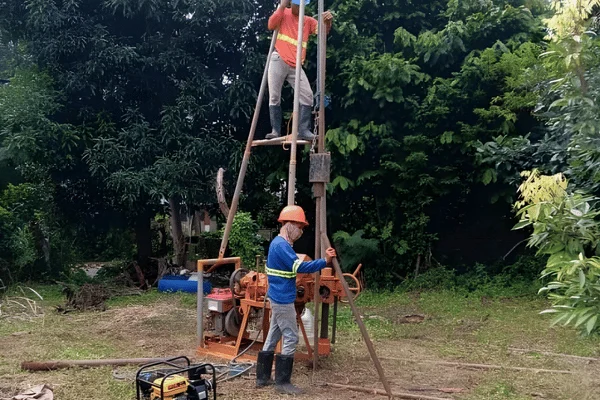
A stable structure begins with accurate knowledge of soil conditions beneath a site. The Standard Penetration Test plays a major role in geotechnical engineering by measuring soil resistance and providing essential data for foundation design. Through the Standard Penetration Test, engineers gain insight into soil density, strength, and behavior under load, helping reduce risks linked to weak or unpredictable ground conditions.
In the Philippines, where soil profiles vary widely across regions and seismic activity is frequent, the Standard Penetration Test has become a key requirement for safe and reliable construction planning. Inch-On Materials Testing Laboratory provides geotechnical services centered on the Standard Penetration Test to support residential, commercial, and infrastructure projects with dependable subsurface data.
What Is a Standard Penetration Test?
The Standard Penetration Test is a field-based geotechnical investigation method used to evaluate the resistance of soil layers. It determines how much energy is required for a sampler to penetrate the soil at different depths. The result of the Standard Penetration Test is commonly expressed as an N-value, which reflects soil density and stiffness.
The Standard Penetration Test is widely used because it provides direct information about subsurface conditions without requiring extensive laboratory simulation. Engineers depend on the Standard Penetration Test to assess whether soil can support structural loads or requires ground improvement.
This testing method is applied in various construction stages, from site feasibility studies to final foundation design. The Standard Penetration Test remains one of the most recognized tools in geotechnical engineering due to its practicality and reliability in field conditions.
How the Standard Penetration Test Works
The Standard Penetration Test follows a systematic process performed during soil drilling operations. A borehole is first created at the site to reach the required depth. Once the borehole is prepared, a split-spoon sampler is placed at the bottom.
A hammer with a standardized weight is then dropped from a fixed height to drive the sampler into the soil. The number of hammer blows required to penetrate specific depth intervals is recorded. These recorded values form the basis of the Standard Penetration Test results.
The process is repeated at different depths to capture variations in soil layers. Each segment of the Standard Penetration Test provides insight into how soil conditions change beneath the surface. Higher blow counts indicate denser or stronger soil, while lower counts suggest softer or weaker layers.
Consistency in execution is important in the Standard Penetration Test because variations in procedure can affect data accuracy. Proper calibration of equipment and correct field methods help ensure dependable results for engineering interpretation.
What Standard Penetration Test Results Reveal
The Standard Penetration Test provides essential data that engineers interpret to understand ground behavior. One of the primary outputs is soil classification based on resistance levels. These classifications help determine whether soil is loose, medium dense, or dense.
The Standard Penetration Test also supports estimation of soil bearing capacity. Bearing capacity refers to the ability of soil to support structural loads without excessive settlement. By analyzing Standard Penetration Test results, engineers can recommend appropriate foundation types such as shallow foundations or deep foundations.
Another important use of the Standard Penetration Test is the identification of weak soil layers. These layers may not be suitable for direct loading and may require soil improvement or deeper foundation systems. The Standard Penetration Test also helps identify zones prone to liquefaction, especially in sandy soils subjected to seismic activity.
With this information, engineers can design safer and more efficient foundation systems that match actual site conditions rather than assumptions.
Importance of Standard Penetration Test in Philippine Construction
The Philippines presents unique construction challenges due to its geological diversity and exposure to earthquakes and typhoons. The Standard Penetration Test plays a critical role in addressing these challenges by providing accurate soil data before construction begins.
Without a Standard Penetration Test, construction projects face higher risk of settlement, tilting, or structural failure caused by unknown soil conditions. These risks can lead to costly repairs, delays, or long-term safety concerns.
Government regulations also require geotechnical investigation reports, including Standard Penetration Test data, for building permits and structural approval. DPWH-BRS standards guide many of these requirements, ensuring that construction projects meet safety expectations.
For developers and engineers, the Standard Penetration Test provides a reliable basis for decision-making. It supports correct foundation design, reduces unnecessary construction costs, and improves long-term structural performance.
When a Standard Penetration Test Is Required
A Standard Penetration Test is typically required before any major construction activity begins. This includes residential buildings, commercial structures, and infrastructure projects such as bridges, roads, and industrial facilities.
Site development projects also require a Standard Penetration Test to assess land suitability before design planning. Areas with reclaimed soil, coastal locations, or previously unstable ground conditions benefit significantly from Standard Penetration Test analysis.
A Standard Penetration Test is also necessary when applying for building permits in many local government units. Engineering design plans often require geotechnical reports that include Standard Penetration Test results to confirm ground stability.
Early execution of a Standard Penetration Test helps project owners avoid unexpected foundation issues during construction phases.
Field Testing and Laboratory Support in Geotechnical Investigation
A complete geotechnical investigation combines field testing and laboratory analysis. The Standard Penetration Test represents a key field testing method that captures real-time soil behavior at the site.
Field testing through the Standard Penetration Test provides direct measurement of soil resistance under natural conditions. However, laboratory testing is also important to further analyze soil composition, moisture content, and classification.
When combined, field results from the Standard Penetration Test and laboratory data provide a complete picture of subsurface conditions. This integrated approach supports accurate engineering interpretation and foundation design recommendations.
Inch-On Materials Testing Laboratory performs both field and laboratory testing services. The Standard Penetration Test is conducted on-site using specialized equipment, while soil samples are analyzed in controlled laboratory conditions for verification and classification.
Why Choose Inch-On Materials Testing Laboratory
Inch-On Materials Testing Laboratory is a DPWH-BRS accredited engineering and construction testing laboratory established in November 2018. The company provides independent testing services focused on soil, concrete, and foundation materials.
The Standard Penetration Test services offered by Inch-On Materials Testing Laboratory follow ASTM and AASHTO standards. These standards guide proper testing procedures and ensure consistency in results across different project sites.
The laboratory uses calibrated equipment and trained personnel to perform the Standard Penetration Test under controlled field conditions. This helps ensure that results remain accurate and suitable for engineering analysis.
As an independent laboratory, Inch-On Materials Testing Laboratory provides unbiased data that supports sound engineering decisions. The Standard Penetration Test reports produced by the laboratory assist contractors, engineers, and developers in planning safe and efficient structures.
Benefits of Standard Penetration Test for Construction Projects
The Standard Penetration Test offers several important benefits for construction planning and execution. One major benefit is improved foundation safety. By understanding soil resistance, engineers can select foundation systems that match actual ground conditions.
The Standard Penetration Test also helps control construction costs. Accurate soil data reduces the risk of overdesigning foundations, which can lead to unnecessary expenses. At the same time, it prevents underdesigning, which may compromise structural safety.
Another benefit of the Standard Penetration Test is improved project planning. Early knowledge of soil conditions allows engineers to adjust design strategies before construction begins, reducing delays and unexpected site issues.
The Standard Penetration Test also supports compliance with regulatory requirements. Many building authorities require geotechnical reports that include Standard Penetration Test data as part of the approval process.
Standard Penetration Test as the Foundation of Safe Construction
A reliable structure depends on accurate understanding of soil conditions. The Standard Penetration Test provides essential data that supports safe, efficient, and compliant foundation design. Without this testing method, construction projects face increased risk from unknown ground behavior.
Across the Philippines, the Standard Penetration Test remains a critical part of geotechnical investigation due to its reliability and practical field application. Inch-On Materials Testing Laboratory continues to support construction safety through professional Standard Penetration Test services combined with laboratory soil analysis.
Every successful structure begins with informed decisions about the ground it stands on, and the Standard Penetration Test plays a central role in that process.
Frequently Asked Questions (FAQ)
What is a Standard Penetration Test?
A Standard Penetration Test is a geotechnical field method used to measure soil resistance by recording the number of hammer blows required to drive a sampler into the ground. It helps determine soil density and strength.
Why is the Standard Penetration Test important?
The Standard Penetration Test provides data needed for safe foundation design. It helps engineers understand soil conditions and reduce risks linked to settlement or structural instability.
How deep is a Standard Penetration Test conducted?
The depth of a Standard Penetration Test depends on project requirements and soil conditions. It is typically performed at multiple depths within boreholes until suitable bearing layers are identified.
What is an N-value in a Standard Penetration Test?
The N-value in a Standard Penetration Test represents the number of hammer blows needed to drive the sampler a specific distance into the soil. It reflects soil density and stiffness.
Is a Standard Penetration Test required for building permits?
Many local government units and engineering regulations require geotechnical reports that include Standard Penetration Test results as part of the building permit process.
Who performs a Standard Penetration Test?
A Standard Penetration Test is performed by trained geotechnical engineers or technicians using specialized drilling and sampling equipment under controlled field conditions.